

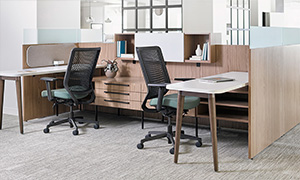
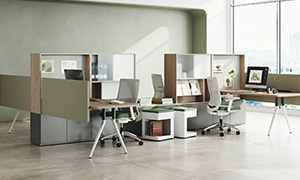
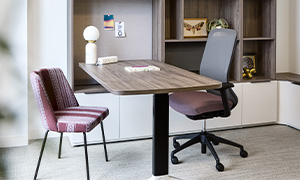
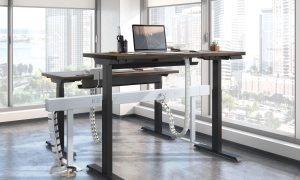


Somebody forwarded you a floor plan and asked you to look through some furniture options. You’ve never bought for a hundred-person office before. You have a budget, a date, and a floor plan. Then there’s the manufacturer list, which is longer than any one person could reasonably sort through.
Search for commercial office furniture manufacturers, and you get a page of names and almost nothing that explains what each company actually builds. Every company looks capable. Every catalog looks good. Which of them is built for the project sitting on your desk is the question the results page might not answer.
Most furniture companies aren’t built for the same job, though. Some manufacturers make everything a workplace needs, so one order can cover a whole floor. Some make seating and nothing else, with more adjustment and sizing options. Some are known for competitive pricing and getting product out the door quickly. Some are known for design-forward pieces that shape how a space feels when you walk in. Others are built specifically for hospitals, schools, or public agencies. The options feel endless.
How do you choose when they all have real strengths? The best answer is doing the research to figure out which lines up best with your project.
Define the Project Before Comparing Brands
Start with your scope. Scope is the full picture of what you’re buying: what goes in the space, how much of it, when it has to be there, and what the building or the organization requires.
Write down what the project has to cover:
- Which product categories you need: workstations, private offices, seating, conference, lounge, storage, or some mix
- How many of each, and whether that number might grow later
- The installation date, and whether it can move
- The budget range, and whether it’s fixed or has contingency
- The setting: corporate, healthcare, education, or government
- Whether the furniture has to match anything that’s already there
Use this list as your filter. If a manufacturer can’t supply a category you need, then you can mark it as a non-fit.
Match the Manufacturer to the Product Categories You Need
Office furniture brands sort roughly into two groups, and knowing which you’re looking at changes how you compare them.
Full-line manufacturers build across a lot of categories. This may feel like the simpler choice in terms of decision-making, because you end up with one purchase order that covers desks, storage, conference tables, and seating, with finishes that coordinate across all of it. Generally, there’s one catalog to work from, which makes the final order easier to put together and easier to add on items later.
Category specialists usually get really good at building one thing. Seating is the usual example. Because it’s all they make, they can offer way more choices: more ways to adjust the chair, more mechanisms, more fabric options, and more sizes.
Realistically, most projects use both. Desks and storage come from a full-line manufacturer; task chairs come from a seating specialist. That split usually comes down to what the project cares most about. Chairs are the common example, because people sit in them eight hours a day, so a compromise there gets noticed daily. If the rest of the floor is straightforward, there’s no reason to complicate it.
We work with manufacturers in both groups. Our partners include full-line makers like HON, Kimball International, and Maverick, plus seating-focused manufacturers including SitOnIt Seating, OM, and Humanscale.
Consider the Setting the Furniture Will Serve
A lot of manufacturers build specific lines for specific environments. It’s worth looking at a few things beyond how the furniture looks, since the real differences come down to how it gets used daily. Those differences are practical: how easily a surface wipes clean, how much wear the fabric takes, and how the seating is sized.
Reception is a good example. A chair in your lobby gets sat in by a different person every twenty minutes, and it gets cleaned a lot more often than a chair at somebody’s desk. Both are seating, but they’re used differently, so the purchasing choice should match the everyday use.
Here’s what tends to change by setting:
- Corporate. Usually the widest range of options, since the furniture often needs to look cohesive across a whole floor and match how the company presents itself.
- Healthcare. Surfaces and fabrics that hold up to frequent disinfecting, plus seating sized for a wide range of visitors.
- Education. Furniture built to get moved around constantly and take hard use every day.
- Government. Public agencies often have to buy through pre-approved contracts, and a manufacturer either holds one or doesn’t.
Among the manufacturers we carry, Kimball International covers workplace, healthcare, and hospitality, and National builds for public sector organizations. Whether a specific line works for your setting is something we enjoy walking through with you, so the furniture you choose fits how you’ll actually use it.
Ask About Lead Times Before You Finalize the Furniture Plan
Lead time is part of the project, just like budget and layout, and it’s worth thinking about while you’re still comparing products.
There’s no standard lead time for commercial furniture. It varies by manufacturer, by product line, and by any specialty options. Within the same line, changing a finish, fabric, size, or configuration can change the schedule. Some products are stocked and ready to ship. Others get built after the order is placed. Two chairs that look similar in a catalog could arrive weeks apart.
How much that matters depends on the kind of deadline you have.
Say your date is fixed. A lease begins, a school opens, or people are already scheduled to move in. Availability becomes one of your filters, right alongside function, size, and budget. You’re choosing from the products that fit the project and can get there on time.
If your date has some flexibility, the products you want can set the schedule instead. Waiting another five weeks for the right chair is a reasonable call when you know about the wait up front and plan around it.
The schedule gets more specific as the order comes together. Published lead times usually cover manufacturing through shipment, so freight, receiving, delivery, and installation still need to be added on top.
If everything installs at once, the longest-lead item sets the installation date. If the project installs in phases, you can work out what needs to arrive first, and whether anything needs a temporary substitute or a later install.
Manufacturers also approach availability differently. HON offers a curated quick-ship program for projects that need furniture sooner. SitOnIt Seating uses a build-to-order model with expedited shipping on many customized products. Those programs help narrow the search, though the actual timeline still comes down to the specific product, options, quantity, order date, and delivery location.
If you want help reviewing a product list or working toward a specific installation date, we’re happy to check current availability, flag anything that could affect the schedule, and help you compare alternatives before you finalize the order.
Read the Warranty and Ask About Replacement Parts
Furniture decisions tend to get made around the installation date, but you’re going to live with the order for years afterward. The warranty tells you what support you can expect if something fails after installation.
Furniture made for commercial spaces generally comes with a commercial warranty written for heavier use than a residential warranty. It accounts for chairs being used throughout the workday, often by different people, for years. However, one chair may effectively have several warranties bundled together, with different components covered for different lengths of time.
Frames often receive long coverage, but they do not always receive the longest coverage. Some manufacturers cover frames and mechanisms for the same period while giving shorter coverage to fabrics, foam, electrical parts, or other components affected by daily use. Even a product advertised with a lifetime warranty may have separate limits for certain materials or parts.
It is worth asking:
- How long is each component covered?
- Does the coverage assume a standard workday, and what changes in a space used around the clock?
- What counts as normal wear, and what type of damage would void the coverage?
- Who handles a claim: the manufacturer or the dealer you purchased from?
Then ask the question that may come up three years later: can individual components be replaced? On some products, you can replace a damaged cushion, arm, work surface, caster, or mechanism without replacing the entire piece. On others, you cannot.
Replacement-part availability and warranty coverage are related, but they are not the same. A component may still be available for purchase after its warranty ends. A component covered by the warranty may also be unavailable in the original color, fabric, or finish.
Ask how long the manufacturer typically supports a product after it has been discontinued and whether replacement parts, fabrics, and finishes are likely to remain available. A compatible part may keep the furniture usable, but it may not provide an exact visual match years later.
At D&R Office Works, we help clients look beyond the installation date so they understand the coverage, service process, and replacement options before purchasing.
Get Help Choosing Furniture for Your Project
There are a lot of connected decisions in a commercial furniture project, and it can be difficult to know which ones need to happen first. D&R Office Works brings those decisions into one process, helping you move from an initial list of needs to furniture that works within the space, budget, and project schedule.
Even with all the moving parts, the furniture you choose should last your business for years, which makes it the decision worth getting right. We’re happy to walk you through the selection process while keeping tabs on the smaller details along the way.
If you already have a floor plan or product list, send it to us along with your target budget and installation date. We can help you narrow the options and figure out what still needs to be confirmed before you order.
