

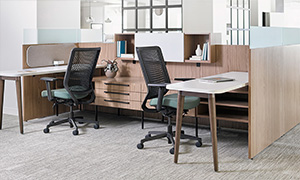
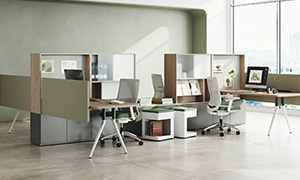
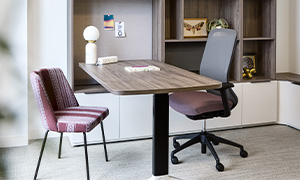
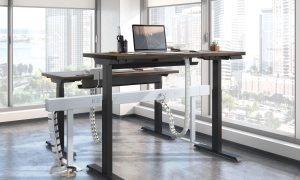


Every organization wants employees who are engaged, focused, and committed to staying long-term. Yet many overlook one of the most direct levers for achieving all three: the furniture people sit in and work at every day. The benefits of ergonomic office furniture extend well beyond physical comfort. They show up in measurable business outcomes like reduced absenteeism, stronger daily performance, and improved retention rates. For facilities managers and operations leaders tasked with justifying furniture investments, the data tells a compelling story.
The Cost of Ignoring Ergonomics
The average U.S. worker logs roughly 1,800 hours a year, and a significant portion of that time is spent at a workstation. When those workstations don’t support the body properly, the consequences add up quickly. Poor posture, repetitive strain, and physical discomfort contribute to musculoskeletal disorders, which OSHA identifies as one of the most common causes of lost or restricted work time.
The financial impact is significant. Missed workdays, workers’ compensation claims, and reduced output all chip away at an organization’s bottom line. According to OSHA, implementing ergonomic solutions can significantly reduce the number and severity of these injuries while increasing productivity. These stats represent real costs that compound across departments and fiscal years, making the case for ergonomic investment a financial one as much as a wellness one.
How the Benefits of Ergonomic Office Furniture Show Up in Performance
When employees are physically comfortable, they can focus longer and produce higher-quality work. It sounds simple, but the impact is measurable. Research consistently shows that ergonomically equipped workspaces lead to meaningful gains in daily output. Adjustable seating with proper lumbar support, height-adjustable desks, and well-positioned monitors reduce fatigue and keep energy levels steady throughout the day.
The connection between comfort and cognitive function matters too. Studies have shown that environmental factors like posture, temperature, and workspace setup directly influence concentration and accuracy. When employees aren’t distracted by back pain or wrist strain, their attention stays on the task at hand. For organizations managing large teams or multi-location operations, even a modest per-employee productivity improvement creates a significant cumulative effect. The furniture investment pays for itself through better work, fewer errors, and more consistent daily performance.
The Retention Connection
Hiring and onboarding a new employee costs time and money. When people leave because their work environment doesn’t support their well-being, that cost repeats. Ergonomic furniture plays a direct role in retention because it signals something employees notice and value: that the organization takes their comfort and health seriously.
This message matters in competitive talent markets. An uncomfortable workspace contributes to dissatisfaction, fatigue, and eventually turnover. On the other hand, a well-equipped environment reinforces a culture of care, which strengthens loyalty and engagement over time. The link between workspace quality and retention is especially relevant for healthcare facilities, educational institutions, and corporate offices where staff spend long hours at desks, stations, or shared workspaces. When employees feel supported physically, they’re less likely to seek that support elsewhere.
Making the Case to Leadership
One of the biggest hurdles to ergonomic investment isn’t awareness; it’s budget approval. Facilities managers and operations directors often understand the value of better furniture but need help framing it in terms that leadership responds to.
The strongest approach connects ergonomic upgrades to outcomes the C-suite already tracks: absenteeism rates, healthcare costs, productivity metrics, and employee retention data. Positioning the investment as a cost-reduction strategy rather than an expense shifts the conversation. When leadership sees that each dollar spent on injury prevention can return two or more through lower claims and stronger performance, the decision becomes much easier to support. Starting with a targeted assessment of current workstations can also build momentum. Identifying specific risk factors and tying them to measurable outcomes gives leadership a clear before-and-after framework for evaluating the investment.
How D&R Office Works Supports Ergonomic Upgrades
D&R Office Works partners with leading manufacturers to deliver ergonomic furniture built for daily performance and long-term durability. Because D&R works with multiple manufacturers rather than a single brand, every recommendation is objective and tailored to each organization’s specific needs, workflow, and budget. The process goes beyond product selection. D&R’s veteran team evaluates how teams work and recommends solutions that integrate ergonomic upgrades into a cohesive workspace plan. With in-house delivery and installation, every piece is assembled with precision and positioned according to the original design intent.
The benefits of ergonomic office furniture are real, measurable, and well within reach. D&R Office Works helps organizations across Southern California turn those benefits into lasting results. Contact us today to find the right ergonomic solutions for your team.
